
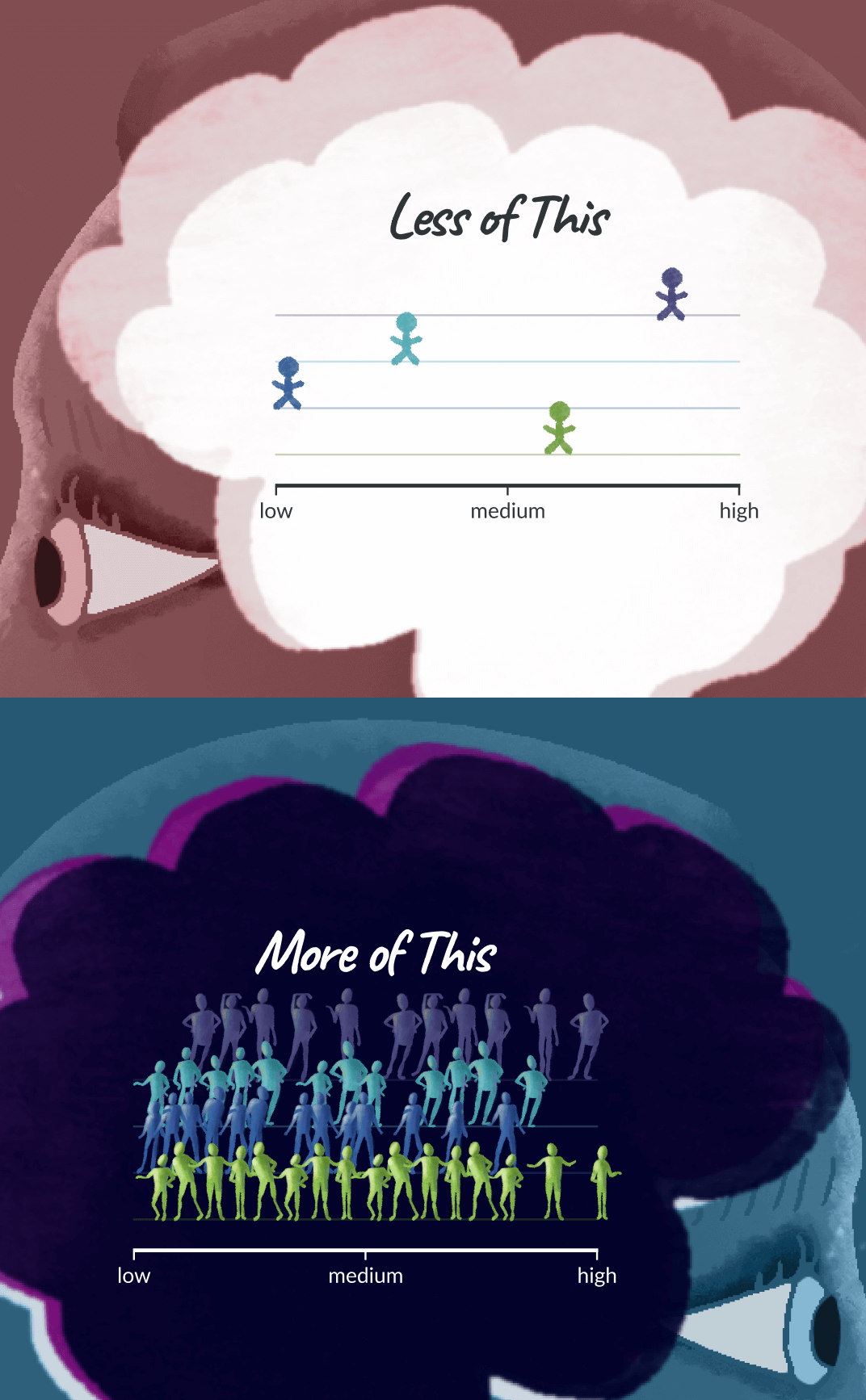
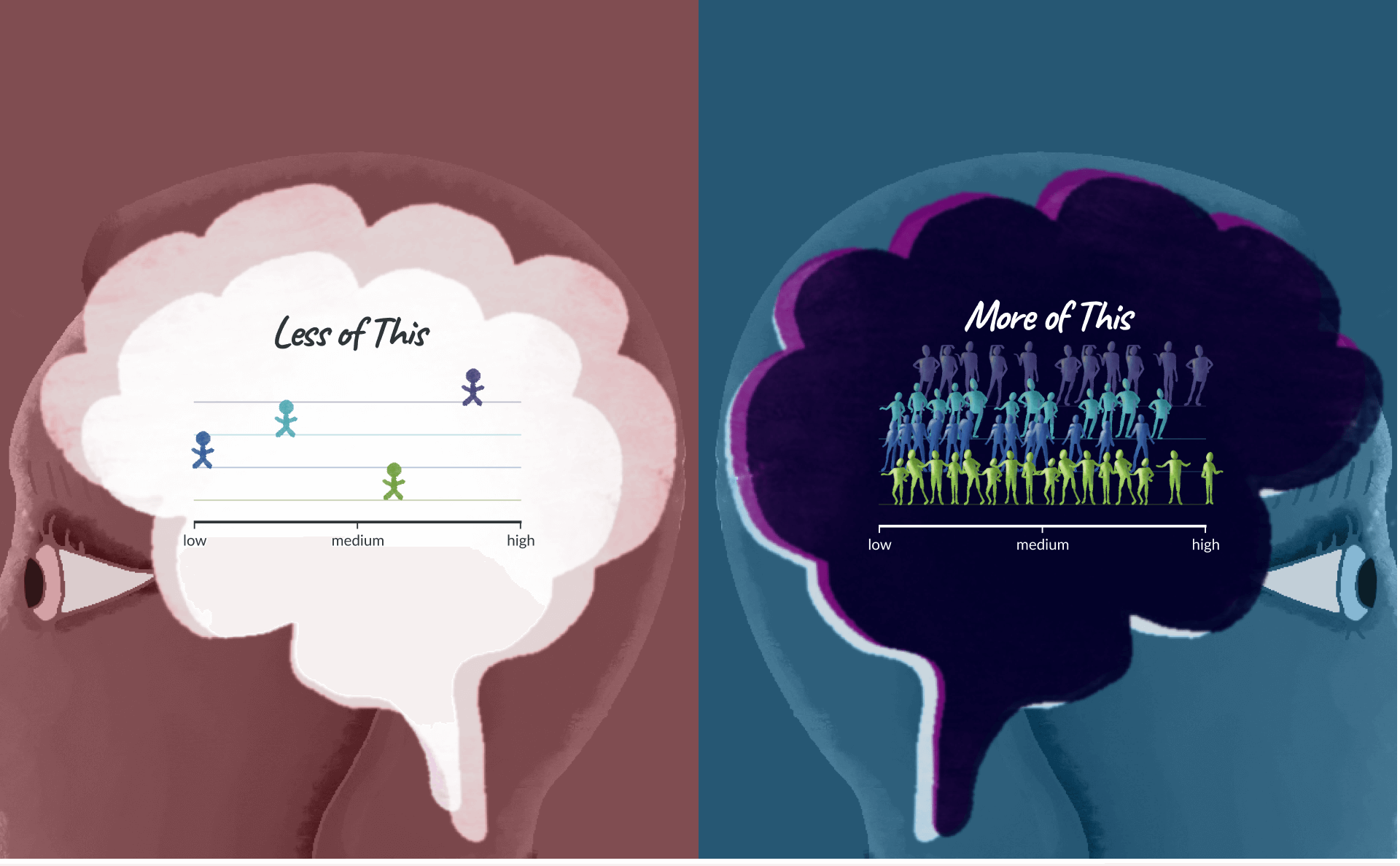
Must Be A Tuesday: Affect, Attribution, and Geographic Variability in Equity-Oriented Visualizations of Population Health Disparities
Collaboration with Lace Padilla, examining equitable data design techniques for population mortality charts.
Dispersion vs Disparity: Hiding Variability Can Encourage Stereotyping When Visualizing Social Outcomes
Collaboration with Cindy Xiong Bearfield, exploring the impact of variability on attribution and stereotypes.
Polarizing Political Polls: How Visual
Collaboration with Cindy Xiong Bearfield, exploring how social normative influences are triggered by charts.
When people think of “good dataviz” they think of John Snow’s maps, because good dataviz is supposed to be intellectual and enlightening. It works by guiding us toward smarter, more rational decisions. But there are other ways that data can influence us, and a surprising amount of it relates to social psychology.
Public dataviz (e.g. dashboards published by institutions like health or education agencies) can also be influential, but not always in the ways we expect. Conventional ways of visualizing social outcome disparities are an example where conventional data visualization approaches can backfire.
We read ambiguous signals through our expectations.
Good dataviz is good writing.
Good dataviz means good comparisons.
Our attitudes, beliefs and behaviors are often more socially driven than reason-driven.
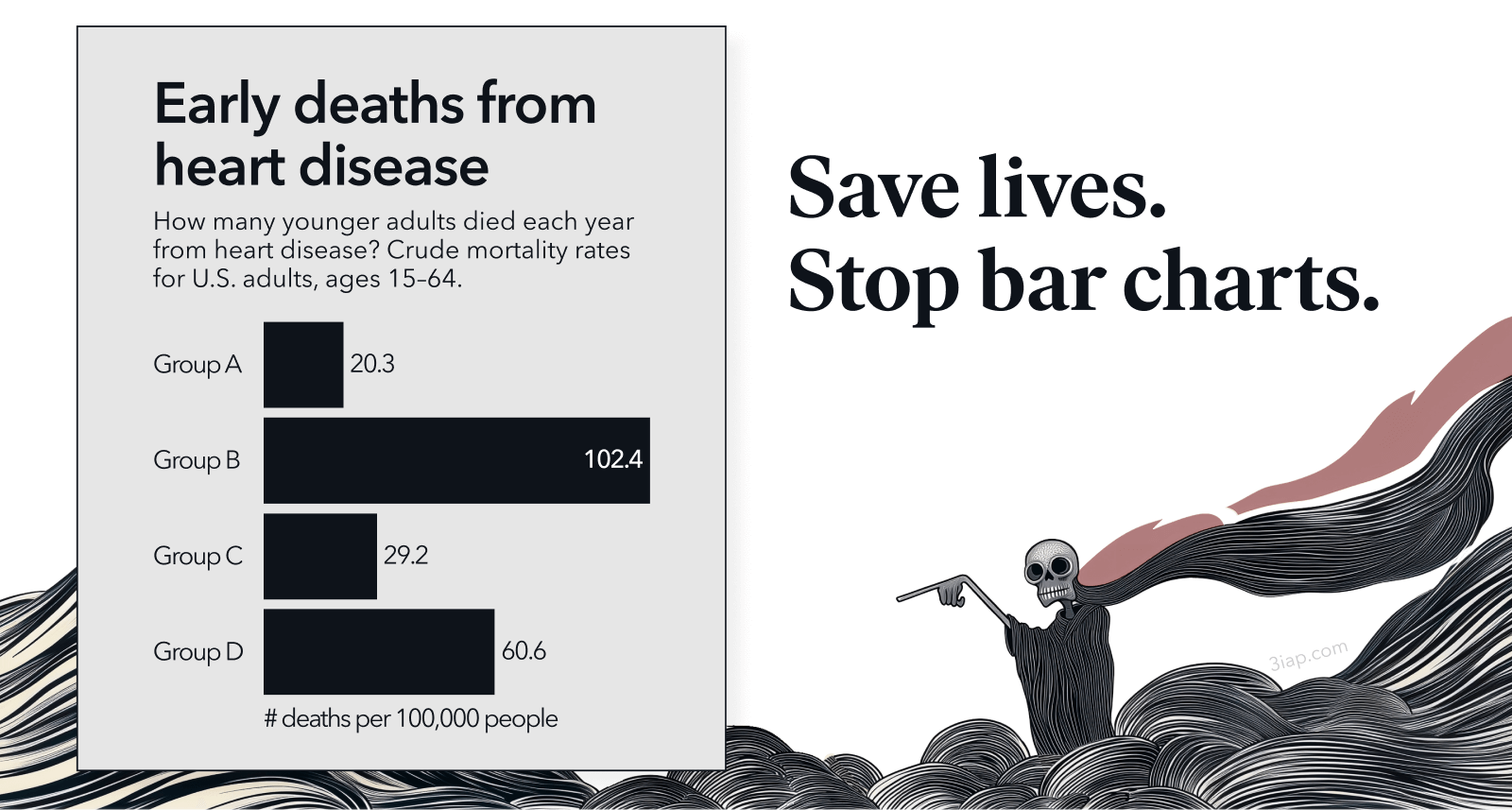
Social cognitive biases can interfere with viewers' perceptions of dataviz. For example, they can bias viewers' causal explanations toward blaming the groups being visualized, instead of structural factors.
They blame people, not systems.
e.g. health outcomes, educational outcomes, workplace outcomes, eugenics, and misogyny.
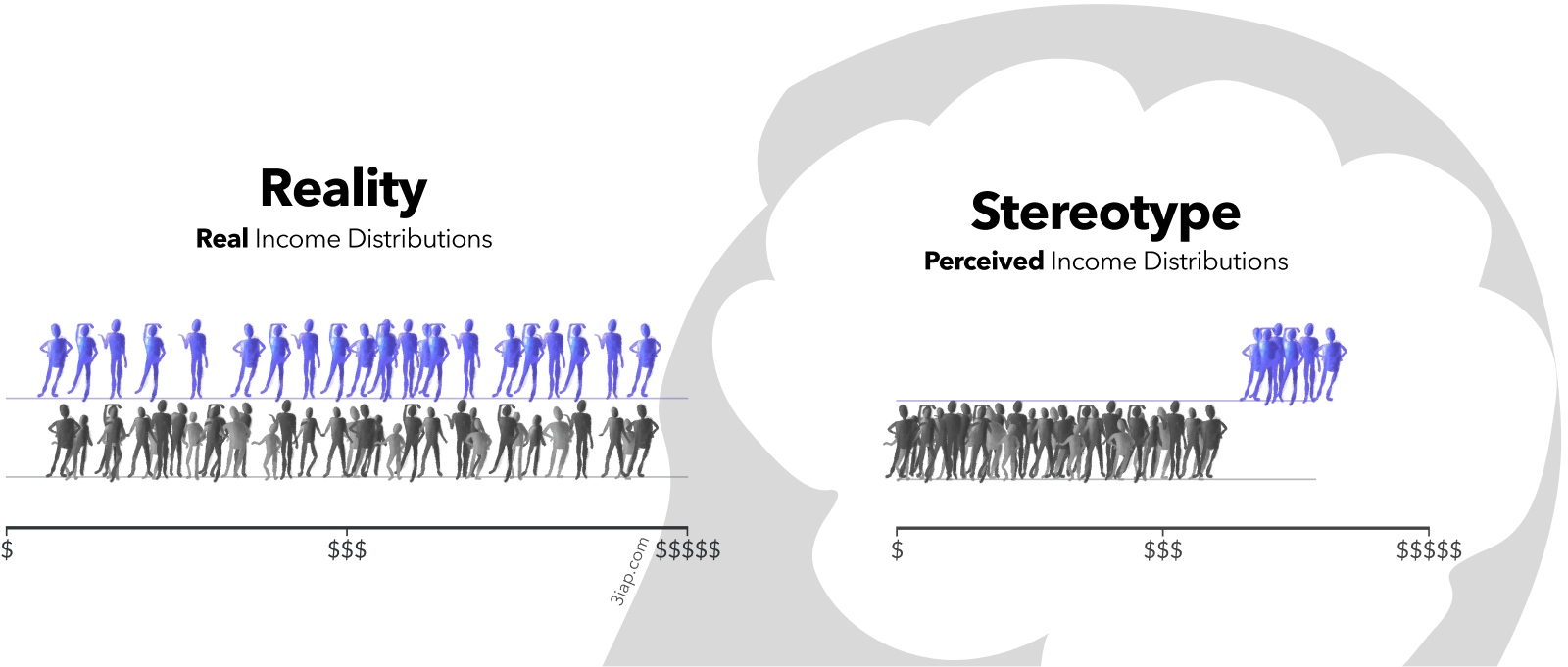
Harmful stereotypes harm everyone by undermining collective action.
Hiding outcome variability promotes harmful stereotypes and misattributions about the groups being visualized.
Charts that stereotype one group hurt everyone, by undermining collective action.
Boundary busting. Blaming systems not people. Counter-stereotypes.
Charts can be threatening!
Winning the attention game incentivizes drama.
How to stop stirring drama.